
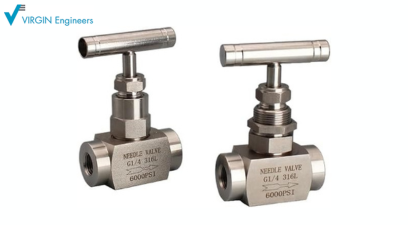
Material selection decides how long a needle valve lasts, how much it costs to maintain and whether it fails safely under pressure. Alloy Steel Needle Valves and Stainless Steel Needle Valves are built for different operating environments: one is manufactured for extreme pressure and heat, the other for chemical and moisture resistance. Choosing between them in an Alloy Steel vs Stainless Steel Needle Valves comparison depends on four factors: operating pressure, process temperature, corrosion exposure, and budget. The sections below break down both material families so the valve matches the application rather than the other way around.
What Is an Alloy Steel Needle Valve?
An Alloy Steel Needle Valve is manufactured from alloy steels containing chromium, molybdenum, or nickel, added to raise strength and heat tolerance beyond plain carbon steel. The material in this composition is high in mechanical strength and provides excellent durability in cycling applications. Alloy steel construction is suitable for systems that experience pressure and temperature beyond the working limits of standard materials. The specific alloy steel needle valves are essential to the operation of high-pressure instrumentation lines and gauges for reliable shutdown and flow control.
What Are Stainless Steel Needle Valves?
Stainless Steel Needle Valves are commonly produced in SS304, SS316, or SS316L. Molybdenum content in SS316 and SS316L improves resistance to chlorides and pitting, which gives these grades an edge in oxidation resistance that alloy steel cannot match. Aggressive chemicals, constant moisture and marine air degrade alloy steel surfaces quickly; stainless steel holds up under the same exposure with far less surface damage.
Alloy Steel vs Stainless Steel Needle Valves: Key Differences
Alloy steel and stainless steel needle valves differ mainly in corrosion resistance, temperature limits, and maintenance needs. The choice depends on the media, pressure, and environment in your process line.
Eight practical criteria separate the two material families during specification:
| Property | Alloy Steel Needle Valve | Stainless Steel Needle Valves | Why It Matters |
| Corrosion Resistance | Low to moderate; needs protective coating | High; resists chemicals, moisture, and salt air | Stainless steel skips the coating upkeep alloy steel needs. |
| Mechanical Strength | High tensile strength for heavy loads | Moderate to high, sufficient for most process lines | Alloy steel handles heavier mechanical loads without deforming. |
| High-Temperature Performance | Retains strength above 400°C | Reliable to 400°C, then softens | Alloy steel keeps its strength past the point stainless steel softens. |
| Pressure Capability | Rated for high-pressure steam and gas service | Suited to moderate-to-high pressure lines | Alloy steel suits higher-pressure steam and gas service. |
| Wear Resistance | Strong resistance to abrasion and cycling | Good resistance, slightly below alloy steel | Alloy steel outlasts stainless steel under constant cycling. |
| Maintenance | Periodic corrosion checks required | Low maintenance in corrosive settings | Stainless steel cuts inspection frequency in corrosive settings. |
| Cost | Lower material cost | Higher upfront cost | Alloy steel lowers upfront spend; stainless steel reduces upkeep costs. |
| Best Applications | Steam, oil & gas, petrochemical, boilers | Chemical, marine, pharma, food, water treatment | Match the valve material to the media, not the industry alone. |
Also Read: Ball Valve vs Needle Valve: Key Differences Explained
When Should You Choose an Alloy Steel Needle Valve?
Alloy steel needle valves are the top choice for demanding industrial environments where extreme temperatures and immense pressure are constant factors. Their rugged construction ensures reliable flow control, making them indispensable for critical, heavy-duty operational safety.
These valves are the preferred option in several highly demanding applications:
- High-pressure steam systems: They provide the necessary structural strength to handle the intense force and heat generated by commercial steam lines.
- Thermal power plants: The durable alloy material easily resists the extreme thermal cycling typical in continuous power generation facilities.
- Oil & gas pipelines: They offer superior resistance to the corrosive environments and high pressure conditions found during extraction and transport.
- Petrochemical processing: These valves safely manage the flow of volatile chemicals and aggressive fluids without degrading over time.
- Boiler and pressure vessel applications: The robust build prevents dangerous leaks and maintains precise control under continuous high stress.
- High-temperature instrumentation lines: They ensure accurate readings and safe operation by withstanding severe heat that would otherwise compromise standard valve materials.
When Are Stainless Steel Needle Valves the Better Choice?
Stainless Steel Needle Valves perform better across six scenarios: corrosive chemical processing, marine and offshore installations, pharmaceutical manufacturing, food and beverage production, water treatment and desalination plants and hygienic or moisture-prone environments. Corrosion resistance matters more than raw mechanical strength in each of these settings and it directly extends service life between replacements.
How to Select the Right Needle Valve Material
Five steps guide the decision. Assess operating pressure and temperature first; these two numbers often eliminate one material family immediately. Assess the process media for corrosivity, as chlorides, acids and exposure to salt promote the use of stainless steel instead of alloy steel. Consider maintenance frequency, expected unit lifespan and initial purchase cost. Before the purchase order is finalized, consult a reputable manufacturer to align the valve material with the real operating conditions of the application.
Summary
The Alloy Steel vs Stainless Steel Needle Valves decision rests on pressure, temperature, corrosion exposure and lifecycle cost rather than sticker price alone. Alloy steel fits high-pressure, high-temperature service; stainless steel fits corrosive, marine and hygienic environments. Virgin Engineers has manufactured tube fittings and instrumentation valves for three decades, working in stainless steel, Monel, duplex steel, brass and other metals to customer specification, with in-house machinery covering the full production process. Contact Virgin Engineers to confirm the right needle valve material for your operating conditions.